Car Mechanic Labour Rates UK 2026: Ultimate Regional Price Guide
Wondering how much garages charge per hour for repairs in 2026? The car mechanic labour rate in the UK varies dramatically depending on where you live and which type of garage you choose. With labour costs often representing 50-70% of your total repair bill, understanding these rates is essential for budgeting and avoiding overpayment. In this comprehensive guide, you'll discover current mechanic hourly rates across every UK region, learn the differences between main dealer and independent garage pricing, and gain practical tips for getting fair quotes. Whether you're in London facing premium rates or Scotland enjoying more competitive pricing, we'll help you navigate the complex landscape of garage labour rates by region UK.
Understanding Car Mechanic Labour Rates in the UK
The car mechanic labour rate in the UK is the hourly charge garages apply for repair and maintenance work, separate from parts costs. These rates have evolved significantly in 2026, reflecting increased overheads, advanced diagnostic equipment requirements, and regional economic variations. Unlike parts prices which remain relatively consistent, labour rates fluctuate considerably based on location, garage type, and specialisation.
Most UK garages calculate labour using standardised time guides that estimate how long specific jobs should take. For example, a brake pad replacement might be quoted at 1.5 hours of labour, regardless of whether the mechanic completes it faster. This system, whilst standardised, is then multiplied by the garage's hourly rate, which is where regional and garage-type differences become apparent.
The mechanic hourly rate in the UK encompasses not just the technician's wages but also workshop overheads, equipment financing, insurance, utilities, and business rates. Urban garages face higher premises costs, whilst rural locations might charge less but have fewer competitors. Understanding this breakdown helps you appreciate why rates vary and identify fair pricing in your area.
What Influences Labour Rate Variations
Several factors determine how much garages charge per hour beyond simple geography. Workshop location within a region matters significantly—a garage on a busy high street pays substantially more rent than one on an industrial estate. Specialist equipment requirements also impact rates, as garages investing in manufacturer-specific diagnostic tools need to recoup these costs. Additionally, technician qualifications play a role, with garages employing master technicians or manufacturer-trained specialists typically charging premium rates that reflect their expertise and capability to handle complex modern vehicles.
Standardised Time Guides and How They Work
Most reputable garages use systems like Autodata or manufacturer-specific time guides to estimate job duration. These databases provide standardised labour times developed from industry averages. For instance, replacing a timing belt might be listed as 3.5 hours, and this figure is multiplied by the garage's hourly rate. This approach ensures consistency and allows customers to compare quotes fairly. However, if unexpected complications arise—such as seized bolts or additional damage—garages will typically communicate this and provide revised estimates before proceeding with extra work.
Main Dealer Labour Rate UK vs Independent Garages
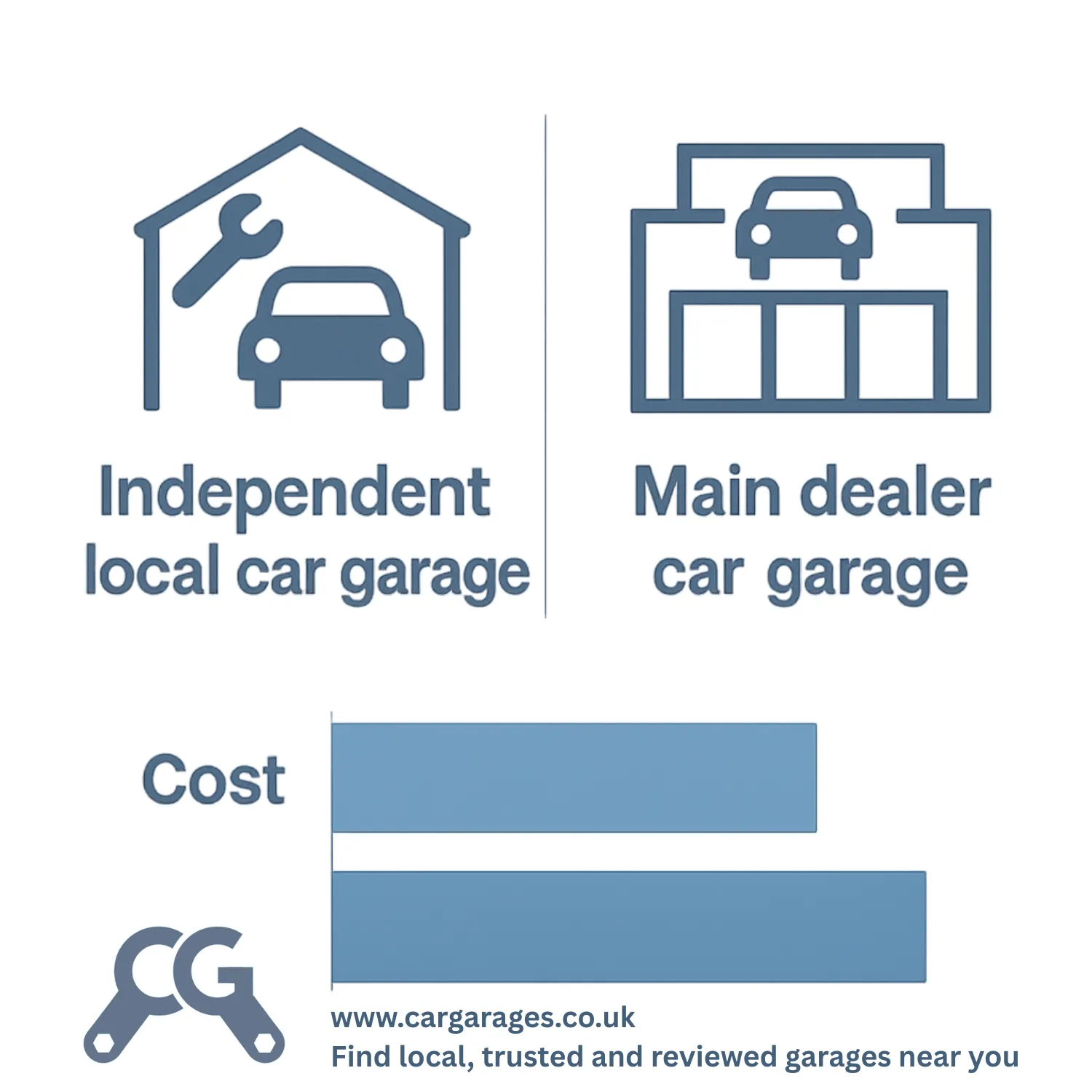
The main dealer labour rate in the UK typically ranges from £90 to £180 per hour in 2026, with premium marques like BMW, Mercedes, and Audi often at the upper end. These rates reflect manufacturer-specific training, dedicated diagnostic equipment, and genuine parts supply chains. Main dealers offer specialist knowledge for particular brands and typically provide manufacturer-approved service stamps that can enhance resale value, particularly during warranty periods.
In contrast, the independent garage labour rate averages £50 to £90 per hour across most UK regions. Independent garages offer considerable value whilst maintaining professional standards, with many technicians holding equivalent qualifications to dealer counterparts. They typically have lower overheads due to reduced franchise fees and marketing costs, savings they pass to customers. Many independents specialise in particular makes or models, offering expertise comparable to main dealers at more accessible prices.
Fast-fit chains occupy a middle ground, with labour rates typically between £60 and £100 per hour. These establishments offer standardised pricing across locations and focus on high-volume services like tyres, exhausts, and brakes. Their business model emphasises efficiency and quick turnarounds, making them suitable for routine maintenance and straightforward repairs. Each garage type serves different customer needs, and choosing between them depends on your vehicle's age, warranty status, and the complexity of required work. Finding the right garage for your needs is essential.
When Main Dealer Rates Are Justified
Main dealers provide distinct advantages that justify their premium labour rates for certain situations. If your vehicle is under manufacturer warranty, using a main dealer ensures warranty compliance and provides comprehensive service history documentation. For complex electronic issues requiring brand-specific diagnostics, dealers possess proprietary software unavailable elsewhere. Additionally, when selling newer premium vehicles, a complete main dealer service history significantly enhances resale value, potentially offsetting the higher labour costs over your ownership period.
The Independent Garage Advantage
Independent garages offer exceptional value without compromising quality for most repair and maintenance needs. Many independent technicians previously worked at main dealers and bring that expertise to more affordable settings. They often provide a more personalised service, with owners directly involved in customer relationships. Independent garages can source high-quality aftermarket parts that meet or exceed original specifications at lower costs, and their flexible approach means they can accommodate various budgets whilst maintaining professional standards and transparency throughout the repair process.
Garage Labour Rates by Region UK: Complete Breakdown
Regional variations in garage labour rates by region in the UK are substantial in 2026, with location often being the single biggest factor affecting your repair costs. Understanding these geographical differences helps you budget appropriately and recognise fair pricing in your area. The disparities reflect local economic conditions, property costs, competition levels, and regional wage expectations.
London and the South East command the highest rates nationally, with independent garages charging £70-£100 per hour and main dealers reaching £120-£180 per hour. These premium rates reflect expensive commercial property, higher wages, and elevated business operating costs. Central London garages face particular challenges with limited space and parking, further increasing overheads that translate to customer charges.
The Midlands, North West, and South West regions show more moderate pricing, with independent garages typically charging £55-£80 per hour and main dealers £85-£130 per hour. These areas offer a balance between accessibility to major urban centres and more manageable operating costs. Cities like Birmingham, Manchester, and Bristol maintain competitive garage markets with numerous options at various price points.
Check Common Car Problems
Search 559 million UK MOT records by year, make and model.
Know what the work should cost — get prices from garages near you
Scotland, Wales, the North East, and more rural areas generally feature the most competitive rates, with independent garages often charging £50-£70 per hour and main dealers £80-£120 per hour. Lower property costs and reduced overheads enable garages in these regions to offer excellent value whilst maintaining quality standards. However, remote rural locations occasionally charge slightly more due to limited competition and higher parts distribution costs.
London and South East: Premium Pricing Zone
The capital and surrounding counties consistently feature the UK's highest mechanic hourly rates. Independent garages in Greater London average £80-£100 per hour, whilst main dealers frequently exceed £150 per hour for premium brands. Surrey, Hertfordshire, and Berkshire show similar patterns, with commuter belt garages reflecting London's elevated cost base. However, competition remains fierce, and savvy customers can find reasonably priced independents in outer London boroughs and surrounding towns. Always obtain multiple quotes, as rates can vary by £20-£30 per hour even within the same postcode area.
Midlands and Northern England: Balanced Markets
Central England and northern regions offer more accessible labour rates whilst maintaining excellent service standards. Birmingham, Manchester, Leeds, and Liverpool feature competitive independent garages charging £60-£75 per hour, with main dealers typically at £90-£120 per hour. These cities benefit from strong garage competition and lower operating costs than southern counterparts. Smaller towns throughout Yorkshire, Lancashire, and the East Midlands often provide even better value, with independent specialists offering highly competitive rates whilst building loyal local customer bases through quality work and transparent pricing.
Scotland, Wales, and Rural Areas: Best Value Regions
Scotland and Wales consistently deliver the UK's most competitive garage labour rates. Edinburgh and Glasgow independents typically charge £55-£75 per hour, whilst Cardiff and Swansea show similar ranges. Smaller Scottish towns and rural Wales offer even better value, with many established independent garages charging £50-£65 per hour. The North East—including Newcastle, Sunderland, and Middlesbrough—features comparable pricing. These regions combine lower overheads with strong local competition, creating favourable conditions for customers seeking quality repairs at fair prices without compromising on professional standards or technician expertise.
How Much Do Garages Charge Per Hour: 2026 Price Comparison
When asking how much do garages charge per hour in 2026, the answer requires examining specific garage categories and service types. Labour rates aren't uniform even within garage types, as specialisation, equipment investment, and business models create further variations. Understanding these nuances helps you select appropriate garages for different repair needs.
For routine maintenance like servicing, oil changes, and brake inspections, most independent garages charge their standard hourly rate, typically £55-£85 depending on region. These straightforward jobs require less specialised equipment and can be completed efficiently by qualified generalist technicians. Many garages offer fixed-price service packages that bundle labour and parts, providing cost certainty and often representing better value than hourly rates for standard maintenance schedules.
Diagnostic work commands premium rates, with many garages charging £60-£100 for initial diagnostic assessments, sometimes credited against subsequent repair costs. Complex electrical diagnosis or programming work may incur higher rates of £80-£120 per hour, reflecting the expensive diagnostic equipment and specialist knowledge required. Modern vehicles with sophisticated electronics increasingly require these premium services, making specialist-equipped garages essential despite higher labour rates.
Bodywork and paint repairs operate on different rate structures entirely, with body shops typically charging £40-£70 per hour for labour, though paint materials add significant costs. Specialist services like air conditioning regas, wheel alignment, and performance tuning each have market-specific pricing, often as fixed-price services rather than hourly rates. Mobile mechanics offer convenient alternatives, usually charging £50-£80 per hour plus call-out fees, suitable for minor repairs and diagnostics at your location.
Fixed-Price Services vs Hourly Rates
Many garages now offer fixed-price packages for common services, providing cost certainty and simplifying customer decisions. Annual services, MOT tests, brake replacements, and exhaust fitting frequently come as all-inclusive prices covering labour and parts. These packages often represent better value than hourly rate calculations, as garages benefit from streamlined processes and parts purchasing power. However, for unusual repairs or older vehicles requiring additional work, hourly rates remain standard. Always clarify whether quotes are fixed-price or estimates based on hourly rates to avoid unexpected costs.
Specialist vs Generalist Garage Rates
Specialist garages focusing on particular makes, classic vehicles, or performance modifications typically charge £70-£110 per hour, reflecting niche expertise and specialist equipment. These establishments offer invaluable knowledge for unusual vehicles or complex modifications that generalist garages cannot handle. Conversely, generalist independent garages provide excellent value for mainstream vehicles and routine work, with their broader customer base supporting lower rates. Matching your garage choice to your specific needs—specialist for unusual requirements, generalist for routine maintenance—optimises both cost and service quality.
5 Essential Tips for Getting Fair Labour Rate Quotes
Navigating car mechanic labour rates effectively requires informed decision-making and proactive communication with garages. These practical strategies help you secure fair pricing whilst ensuring quality repairs that keep your vehicle safe and reliable.
First, always obtain multiple quotes—at least three—for significant repairs. Labour rate variations between garages in the same area can differ by 30-40%, and comparing quotes reveals market rates whilst identifying unusually high or suspiciously low pricing. When requesting quotes, provide identical information to each garage including vehicle details, symptoms, and any diagnostic codes. Written quotes should specify hourly labour rates, estimated hours required, parts costs separately, and whether prices include VAT.
Second, ask garages to explain their labour rate structure and what it includes. Reputable establishments willingly discuss their pricing, explaining how they calculate job times and whether they use standardised guides. Clarify whether diagnostics are included in repair quotes or charged separately, and confirm whether the quoted hours are fixed or estimates that might increase if complications arise. Transparent garages will provide clear breakdowns and communicate honestly about potential additional costs.
Third, consider timing and flexibility when booking repairs. Some garages offer reduced rates for off-peak booking or flexible timing when they can schedule work around busier periods. Building relationships with local independent garages often yields better rates for repeat customers, as established trust reduces administrative overhead and garages value loyal clientele. Additionally, grouping multiple minor repairs into single appointments can sometimes secure better overall rates than addressing issues separately across multiple visits.

Questions to Ask When Obtaining Quotes
Asking the right questions ensures you understand exactly what you're paying for. Start with: 'What is your hourly labour rate?' followed by 'How many hours will this job take?' Request clarification on whether quoted hours are fixed or estimates, and ask which time guide they reference. Enquire whether diagnostics are included or additional, and confirm if prices include VAT. Ask about warranty coverage on labour and parts, and request details on what happens if complications arise requiring additional work. Professional garages welcome these questions and provide clear, confident answers that build customer trust.
Future Trends: What's Affecting Labour Rates in 2026
The automotive repair landscape continues evolving rapidly in 2026, with several trends influencing how garages price their services and what customers can expect from labour rates moving forward. Understanding these developments helps you anticipate cost changes and make informed decisions about vehicle maintenance investments.
Electric vehicle proliferation significantly impacts garage labour rates and service offerings. EV-qualified technicians require specialised high-voltage training, and garages must invest in specific diagnostic equipment and safety infrastructure. Consequently, garages offering EV services often charge premium rates of £80-£130 per hour for electric vehicle work, reflecting these additional requirements. As EV adoption accelerates, more garages are obtaining necessary certifications, which should gradually normalise pricing through increased competition.
Advanced driver assistance systems (ADAS) and increasing vehicle complexity continue pushing labour rates upward across all garage types. Modern vehicles require sophisticated diagnostic equipment costing tens of thousands of pounds, with subscription-based software adding ongoing expenses. Camera calibrations after windscreen replacement, radar sensor alignment, and software updates represent new service categories requiring specialist knowledge and equipment. These realities mean average labour rates are likely to increase 3-5% annually, though competition and efficiency gains may moderate rises.
Digital transformation is improving transparency and customer experience in 2026, with many garages now offering real-time updates, digital vehicle health reports, and video evidence of required repairs. Whilst these systems require investment, they build customer trust and reduce misunderstandings about necessary work. Additionally, online booking systems and digital quote platforms are making it easier to compare garage labour rates and services, increasing market transparency that benefits customers through better-informed decisions and more competitive pricing pressures on garages.
Frequently Asked Questions
What is the average car mechanic labour rate in the UK in 2026?
The average car mechanic labour rate in the UK in 2026 ranges from £50 to £90 per hour for independent garages, whilst main dealers typically charge £90 to £180 per hour depending on the brand and region. London and the South East feature the highest rates, whilst Scotland, Wales, and northern England offer more competitive pricing. Always obtain multiple quotes to ensure you're receiving fair market rates for your specific location and required services.
Why do main dealer labour rates cost more than independent garages?
Main dealer labour rates reflect manufacturer-specific training, proprietary diagnostic equipment, franchise fees, and premium facilities. Dealers invest significantly in brand-specific tools and ongoing technician certification programmes that independent garages don't require. Additionally, dealer premises in prominent locations carry higher overheads. These factors combine to create labour rates typically 40-80% higher than independent alternatives, though dealers offer advantages like warranty compliance and specialist brand knowledge.
How can I find the best garage labour rates in my region?
Start by obtaining written quotes from at least three local garages—mixing independent workshops, fast-fit chains, and main dealers for comparison. Ask each garage to clearly state their hourly labour rate and estimated hours required for your specific job. Check online reviews to verify quality alongside pricing, as the cheapest option isn't always best value. Building relationships with reputable local independents often yields fair pricing and trusted service over time. Compare garages side by side in our free car owners section.
Do garage labour rates include VAT and diagnostics?
Labour rates are usually quoted excluding VAT, which adds 20% to the final bill, so always clarify whether quotes include or exclude VAT to avoid surprises. Diagnostic fees are typically charged separately, ranging from £40 to £100, though some garages credit this against subsequent repair costs if you proceed with the work. Always request written quotes that clearly break down labour, parts, diagnostics, and VAT separately for complete transparency and accurate cost comparison.
Local Insights
UK driving conditions significantly influence when you'll need garage services and how labour costs impact your maintenance budget. Britain's variable weather—from salted winter roads accelerating corrosion to summer heat stressing cooling systems—means regular professional inspections are essential. MOT requirements for vehicles over three years old ensure annual safety checks, with labour charges for remedial work varying by region. Additionally, UK fuel quality standards and increasingly congested urban driving patterns affect service intervals and repair frequency. Understanding garage labour rates by region in the UK helps you budget appropriately for these necessary maintenance requirements whilst ensuring your vehicle remains safe and roadworthy throughout the year.
Conclusion
Understanding car mechanic labour rates across the UK empowers you to make informed decisions about vehicle maintenance and repair costs in 2026. Regional variations are significant, with rates ranging from £50 per hour in competitive areas to £180 per hour at premium main dealers, so knowing what garages charge in your location is essential for budgeting. The differences between independent garages, fast-fit chains, and main dealers each offer distinct advantages depending on your vehicle and repair requirements. By obtaining multiple written quotes, asking informed questions, and selecting appropriate garage types for specific jobs, you'll secure fair pricing whilst maintaining quality standards. Ready to find transparent, competitive pricing for your vehicle repairs? Discover trusted garages with clear labour rates near you and make confident decisions about your vehicle maintenance today.